San Gabriel’s Historic Streets And Home Styles
April 9, 2026
April 9, 2026
If you are drawn to neighborhoods with character, San Gabriel offers a rare chance to see Southern California history written right into its streets. From the 1771 Mission San Gabriel Arcángel to 1920s subdivision blocks and 1940s small-house neighborhoods, the city shows its growth in a way you can still feel today. If you are house hunting here, understanding that layering can help you better read the area, compare home styles, and spot what makes one pocket different from another. Let’s dive in.
San Gabriel’s historic core starts with Mission San Gabriel Arcángel and the Mission District, which the city describes as the birthplace of the Los Angeles region. That core includes City Hall, the Mission Playhouse, the Arcade Building, the old Bank of San Gabriel, the Grapevine Arbor, and Plaza Park.
What makes the city especially interesting for buyers is that the story does not stop at the Mission. San Gabriel also includes older residential streets shaped by 1920s suburban growth and later 1940s homebuilding, creating a mix of architectural periods and neighborhood patterns across the city.
In simple terms, San Gabriel reads as a city of contrasts. You have a compact civic and cultural core, then quieter residential grids where you can see how local housing evolved over time.
The Mission District centers on Mission Drive, Santa Anita Street, and Mission Road or Junipero Serra Drive. The citywide survey describes this area as a concentration of early cityhood commercial and civic buildings with a cohesive collection of Spanish Colonial Revival architecture.
For a homebuyer, this matters because the Mission core sets the visual tone for much of historic San Gabriel. The area has a civic, pedestrian-scaled feel, and the city’s Historical Walk helps tie those landmarks together into a clear neighborhood story.
The Mission core also looks different from San Gabriel’s residential tracts for a reason. According to design guidance for the district, the area draws from Spanish Colonial period, Mission Revival, and Spanish Colonial Revival vocabulary, while the residential streets show a wider range of early-20th-century and postwar house types.
San Gabriel’s citywide survey identifies several residential districts and planning areas that help explain the city’s older neighborhood fabric. While each pocket has its own feel, together they show how San Gabriel grew from a historic center into a collection of established residential streets.
The California Street district list shows one of the broadest style mixes in the city. Here, you may see Mediterranean Revival, Craftsman, American Colonial Revival, Tudor Revival, Spanish Colonial Revival, Monterey Revival, and Ranch homes along the same general corridor.
That range makes this area useful for buyers who want architectural variety rather than a one-style neighborhood. It also reflects San Gabriel’s long building timeline, with homes from different eras sitting close together.
The survey describes the Country Club area as early suburban development with architecturally distinctive residences. Styles listed here include Craftsman, Prairie, American Colonial Revival, Monterey Revival, Tudor Revival, Spanish Colonial Revival, and Ranch.
If you enjoy established streets with a strong early suburban identity, this is one of the clearest examples in San Gabriel. The variety of architecture can also appeal to buyers who value individual home character.
The Gerona Avenue corridor is described by the survey as an intact 1920s subdivision with mostly period-revival bungalows framed by camphor trees. The listed styles include Craftsman, Spanish Colonial Revival, Tudor Revival, American Colonial Revival, and Minimal Traditional.
For buyers, that suggests a neighborhood where the original subdivision pattern still reads clearly. Streets like this often stand out because the homes relate well to one another while still offering visual variety.
The Mission-Nostrand-Domingo area is identified as another intact 1920s subdivision with mostly period-revival residences. It reflects a similar era of growth, though each block can present a slightly different rhythm and housing mix.
If you are comparing older neighborhoods in San Gabriel, this area helps show how the city expanded beyond the Mission core during the early 20th century. It is part of the broader pattern that gives San Gabriel its layered residential identity.
The survey describes Mount Vernon Drive as an intact concentration of 1940s houses that reflects FHA design principles and the small-house movement. The street list is dominated by Minimal Traditional homes, with some Ranch examples and a few other styles.
This area is especially helpful if you want to understand San Gabriel beyond its prewar revival architecture. It shows the city’s shift into more modest, efficient post-Depression and wartime-era housing patterns.
The Oak Knoll, Vineyard, Coolidge, Roses, and Kendall area is described as an intact 1920s subdivision with architecturally distinctive, mostly period-revival residences. Listed styles include Tudor Revival, Spanish Colonial Revival, French Revival, Mediterranean Revival, and Minimal Traditional.
For buyers who love classic early-20th-century homes, this area is a strong example of San Gabriel’s architectural depth. It also highlights how many of the city’s older neighborhoods were planned with a cohesive street-level identity.
The survey calls Rosemont Park an intact example of planned suburban development in the 1920s. Styles here include Spanish Colonial Revival, Tudor Revival, Monterey Revival, Minimal Traditional, French Revival, and later Ranch homes.
This blend can be appealing if you want an established neighborhood with both historic character and evidence of later residential change. It is another example of how San Gabriel’s older areas often combine consistency with architectural variety.
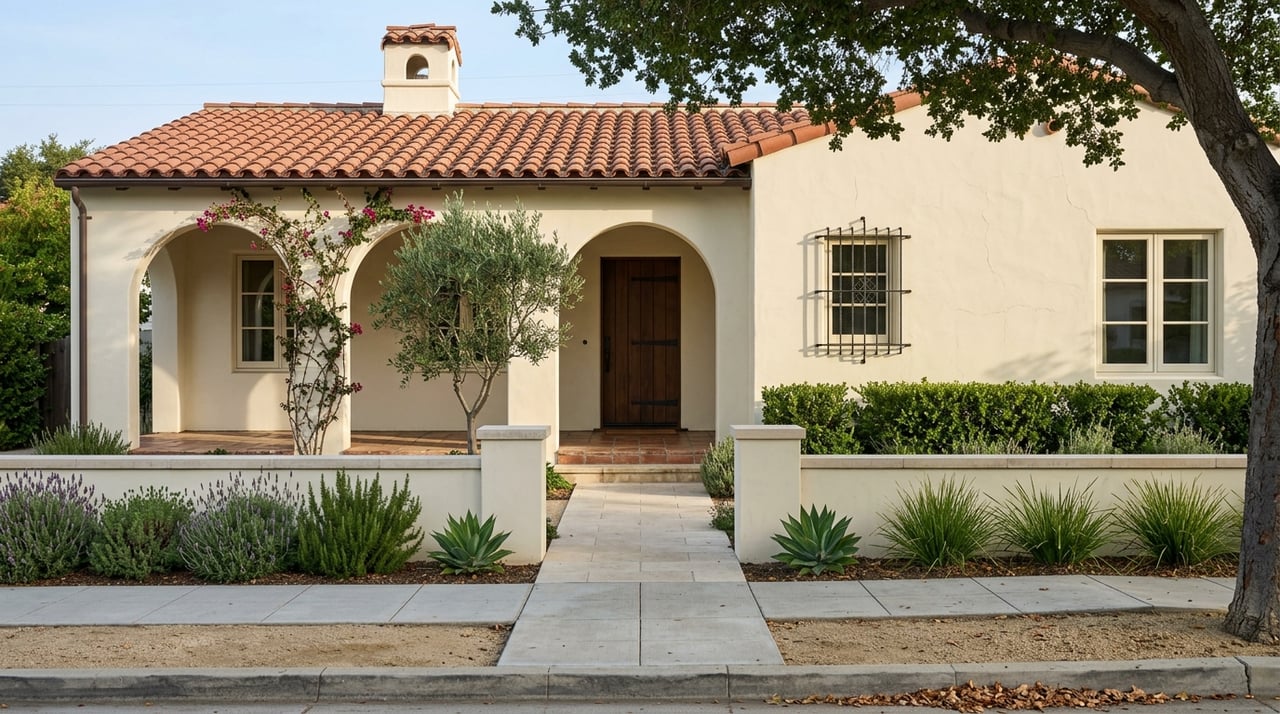
Across San Gabriel’s older streets, several home styles appear again and again. According to the city’s district property lists, the most common prewar styles include Spanish Colonial Revival, Tudor Revival, Craftsman, American Colonial Revival, Monterey Revival, Mediterranean Revival, Prairie, and French Revival.
Later streets introduce Minimal Traditional and Ranch homes. That means your search may span everything from decorative revival-era houses to more streamlined mid-century forms, depending on the block and subdivision.
Here is a simple way to think about the city’s housing mix:
This mix is part of what makes San Gabriel so compelling. You are not looking at a one-note neighborhood, but at a city with visible layers of development.
Historic character can shape more than curb appeal. In San Gabriel, the age of a neighborhood can influence street pattern, home style, lot layout, and the overall feel of a block.
That is why it helps to look beyond a listing photo and understand the broader setting. A Spanish Colonial Revival home near the Mission core may connect to a very different neighborhood story than a Minimal Traditional house on Mount Vernon Drive, even if both are in the same city.
For buyers relocating from outside the area, this local context can make your search more efficient. Instead of treating all of San Gabriel the same, you can focus on the kinds of streets and architectural eras that best match your goals.
San Gabriel has built a meaningful preservation framework around its historic resources. The city updated its Historic Preservation and Cultural Resource Ordinance in 2017, and its current preservation system includes the Historic Preservation and Cultural Resource Commission and the San Gabriel Register of Cultural Resources.
The city has also been conducting a citywide Historic Resources Survey, described as the first of its kind in San Gabriel. For buyers who value neighborhood context, that survey provides a useful way to understand which streets and districts the city has identified as historically cohesive.
If you want to experience the area firsthand, public-facing landmarks can help you get oriented. The city highlights Plaza Park, City Hall, the Mission Playhouse, the Hayes House museum, the Ramona Museum of California History, and the Mission District Historical Walk as part of San Gabriel’s heritage landscape.
If you are exploring San Gabriel in person, try to look at the city in layers rather than as a single style or district. Start with the Mission core to understand the civic and historic center, then compare it with nearby residential streets from the 1920s and 1940s.
As you tour, pay attention to:
This approach can help you notice details that are easy to miss on a quick drive-through. It also gives you a better feel for how each pocket fits into the city’s broader story.
San Gabriel’s historic streets are appealing because they offer more than visual charm. They reflect the city’s long evolution, from mission-era landmarks to early suburban growth and 1940s small-house neighborhoods.
If you are considering a move here, understanding those differences can help you make a smarter decision about where to focus your search. When you want clear, neighborhood-specific guidance, The Kinkade Group can help you evaluate San Gabriel with a thoughtful, consultative approach.
Stay up to date on the latest real estate trends.
I am committed to guiding you every step of the way—whether you're buying a home, selling a property, or securing a mortgage. Whatever your needs, I've got you covered.
THE KINKADE GROUP | CA DRE# 01811027
680 E. Colorado Blvd #400 Pasadena, CA 91101