Monrovia Character Homes Guide: What Buyers Should Know
July 9, 2026
July 9, 2026
If you are drawn to homes with original details, front porches, and a sense of history, Monrovia deserves a close look. This city has a deep stock of older homes, and each one tells a slightly different story through its style, lot size, and location. Whether you are just starting your search or narrowing down favorite blocks, understanding Monrovia character homes can help you shop with more confidence. Let’s dive in.
Monrovia describes itself as the fourth oldest city in Los Angeles County, and that long history still shows up in its housing. The city has a historic-preservation framework that includes a 1995 ordinance and a 2018 Historic Context Statement. It also reports more than 150 historic landmarked homes, along with historic districts such as Wild Rose Tract and North Encinitas.
That matters because older housing here is not just a small niche. It is part of the city’s identity. When you tour homes in Monrovia, you are often looking at neighborhoods shaped by several different building eras rather than a single style or time period.
Monrovia’s development pattern also explains why the housing stock feels varied. Early bungalow areas were laid out with compact 50-by-150-foot lots, while later postwar growth brought ranch-style homes as former farm and orchard land turned into residential neighborhoods. In practical terms, “character home” in Monrovia can mean anything from a small early cottage to a wider midcentury ranch.
In Monrovia, the word “cottage” often points to smaller older homes with charm and modest scale. You may also see cottage-like variations, including Storybook and English Revival influences. City materials highlight a 1927 Storybook Cottage, and Monrovia’s landmark list includes English Tudor Cottage examples.
These homes often appeal to buyers who want personality over sheer square footage. The details can vary from one house to another, so it helps to focus on the overall feel, the condition of original features, and how the lot supports your day-to-day needs.
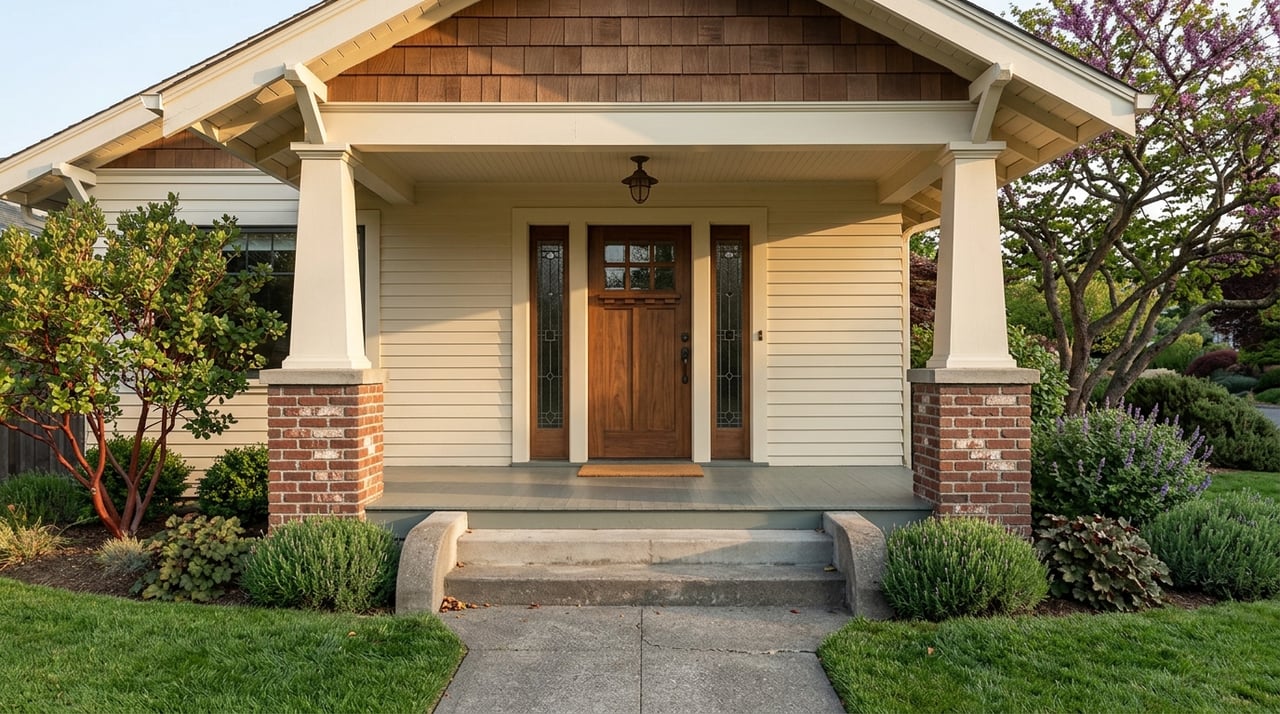
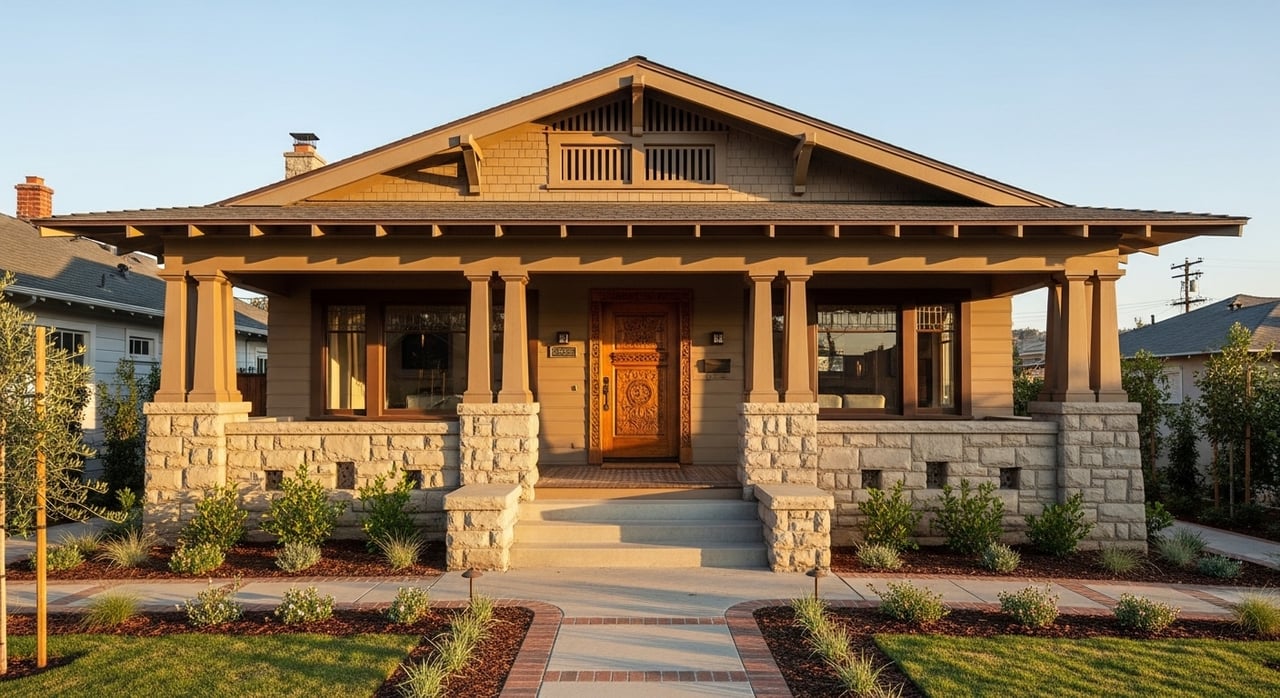
Craftsman is one of the signature character styles in Monrovia. The city notes that Monrovia grew rapidly during the years when Craftsman design was popular, with a local period of significance from 1905 to 1930. That helps explain why the style shows up so often across older residential streets.
Common Craftsman features include low-pitched gable roofs, broad overhanging eaves, front porches, exposed rafters or beams, and a strong emphasis on craftsmanship. In Monrovia, that can range from higher-style architect-designed homes to more modest one-story bungalows that were originally ordered from catalogs.
Wild Rose Tract is a useful example of how this style takes shape locally. The city describes it as one of the most cohesive early-20th-century housing collections in Monrovia, and its original subdivision included 27 lots measuring 50 by 150 feet. That compact layout helps explain why many bungalow blocks feel consistent, close-knit, and easy to recognize.
Monrovia’s own home guide includes Ranch and Mid-Century among the city’s historic home types. These homes usually come from a later chapter of local growth, when residential development spread onto former agricultural land after World War II. If you are searching outside the earliest bungalow areas, this is a style you are likely to encounter.
Typical ranch features include a low-pitched roof, wide eaves, an asymmetrical front, and a horizontal look. These homes often live differently than early cottages or bungalows. You may find a broader footprint, a different relationship to the street, and a layout that reflects a more postwar California approach to everyday living.
In Monrovia, style matters, but location can change both price and lifestyle. Over the three months ending May 2026, the citywide median sale price was $1,009,396, with homes taking 38 days on average and receiving about three offers. Over a similar period, Old Town’s median sale price was lower at $845,000, with a median of 32 days on market.
That comparison is only a snapshot, but it suggests that housing form, setting, and location all play a meaningful role. A smaller historic home near Old Town may offer a very different daily experience than a later home on a different type of lot. Price alone does not tell the whole story.
Old Town adds another layer to the conversation because it functions as the heart of Monrovia. The city notes that some residential properties are within walking distance of both the rail station and Old Town. For buyers who value access and convenience, that can make a compact older home feel especially practical.
Parking is part of that equation too. According to the city, Old Town has ample free parking, no meters, and multiple public lots and garages, though street-sweeping rules still apply. If you are touring homes nearby, it is smart to think beyond the house itself and picture how parking and walkability will affect daily life.
Lot size can shape everything from outdoor use to future planning. In older Monrovia tracts, compact parcels are common, especially where early bungalow blocks were laid out with smaller dimensions. In other parts of the city, including some newer or hillside areas, lot size can vary more significantly.
That is why parcel records are so important when you are comparing homes. The city says the Los Angeles County Assessor provides lot size and dimensions, year built, and unit count. Monrovia’s zoning map and development standards also help show how a property is regulated.
For buyers, this is one of the most practical steps in the process. Two homes may look similar in photos, but the lot dimensions, setbacks, and surrounding context can create very different options for outdoor living, storage, parking, or future changes.
Character homes often come with vocabulary that can feel unfamiliar at first. In Monrovia, a few key terms can help you ask smarter questions and better understand what you are seeing.
A historic landmark is a city designation based on criteria that go beyond age alone. In Monrovia, qualifying properties may be eligible for Mills Act property-tax relief.
A contributing property, sometimes called a contributor, is a home that helps define a historic district. In Monrovia, landmark or contributor status is required for Mills Act contracts.
The Mills Act is a state-law contract that can lower property taxes for qualifying properties. That said, Monrovia does not guarantee a reduction, so it is important to look at the details for any specific property.
These are local rules that govern significant alterations or demolition of main residential buildings that are 50 years or older. If you are considering a remodel or long-term changes, these rules may affect what is possible.
The assessor record is the parcel record showing lot size, dimensions, year built, and unit count. For older homes in particular, it is one of the most useful documents to review early.
When you walk through a Monrovia character home, it helps to go in with a short list of practical questions. These homes can be deeply appealing, but the details matter.
Consider asking:
These questions are not about finding fault. They help you understand how the home functions today and how local rules may shape your options going forward.
The best Monrovia character home for you may not be the oldest or the most ornate. It may be the one that fits your lifestyle, budget, and comfort level with upkeep, lot size, and local regulations. A charming cottage near Old Town and a midcentury ranch in a later subdivision can both be great choices for different reasons.
As you compare homes, try to balance emotion with clear research. Look at style, yes, but also study parcel data, neighborhood context, and whether the property has any historic designation. That kind of informed approach can help you enjoy the charm without feeling surprised later.
If you are exploring Monrovia and want a thoughtful, local perspective on how architecture, lot size, and market position affect value, The Kinkade Group can help you build a smart plan and move forward with confidence.
Stay up to date on the latest real estate trends.
I am committed to guiding you every step of the way—whether you're buying a home, selling a property, or securing a mortgage. Whatever your needs, I've got you covered.
THE KINKADE GROUP | CA DRE# 01811027
680 E. Colorado Blvd #400 Pasadena, CA 91101